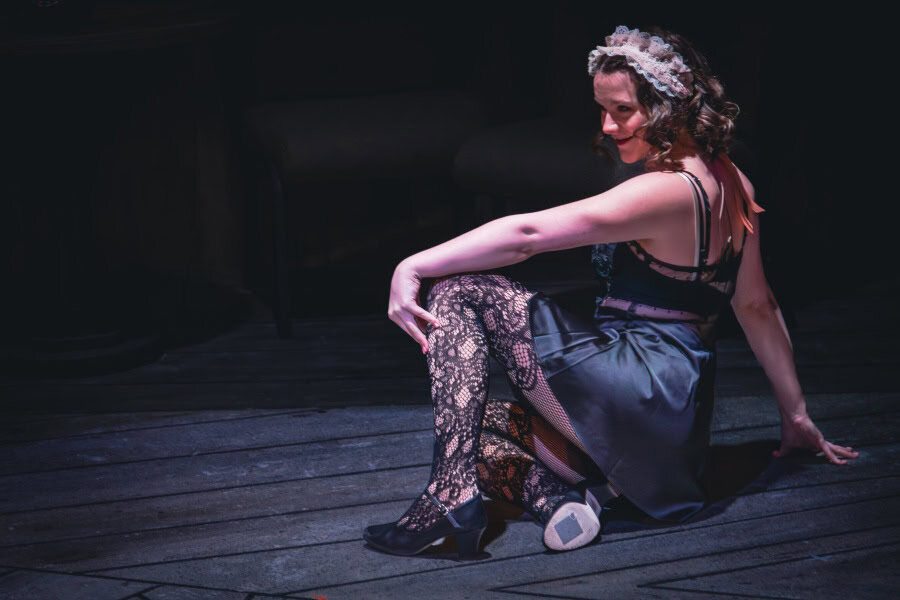
Cast members reflect on storytelling, responsibility, and the lasting impact of the production.
After a powerful and unforgettable run, the cast of Cabaret reflects on the experience of bringing this iconic musical to life. Set in 1930s Berlin as fascism quietly rises, Cabaret blends dazzling nightlife with an unsettling political reality, asking audiences to consider the consequences of complacency and the importance of community.
For the artists involved, the show was more than just another performance. It was a chance to explore difficult themes, connect deeply with one another, and examine how a story set nearly a century ago still resonates today.
Several members of the cast shared their thoughts on what it meant to be part of Cabaret, what challenged them most throughout the process, and what they hope audiences carry forward after leaving the theatre.
Why is the contrast between glamour and harsh reality such a powerful way to tell this story?
Tate (Emcee)
“In Cabaret, the structure feels incredibly intentional. You have these big, glamorous musical numbers where everything is heightened and theatrical, and then suddenly you shift into quieter scenes where the characters aren’t performing for anyone.
That contrast creates this tension that pulls the audience into the same headspace as the characters. We’re swept up in the sparkle at the exact moment we probably should be feeling uncomfortable.
By the end, the show doesn’t let you off the hook. It forces you to sit with that realization, and that’s what makes the storytelling so powerful.”
Madds (Frenchie)
“The flip-flopping between glamour and gravitas feels very deliberate. It keeps the audience from fully realizing how serious things are until it’s almost too late.
We put beautiful costumes and flashy dancing right in front of people, and it’s easy to get caught up in that spectacle. But underneath it, the world of the show is getting darker and more dangerous.
That contrast mirrors real life in a lot of ways. People keep living, celebrating, and distracting themselves while serious things are unfolding around them.”
What themes in Cabaret challenge you the most as a performer?
Matthew (Max)
“The aspect of political apathy is really rough for me. I care a lot about a lot of things, so playing characters who are on the wrong side of history because it’s just a job, or who stay quiet and hope to be left alone, is hard.
But I think that discomfort is important. It forces you to confront the reality that a lot of terrible things in history happened because people convinced themselves it wasn’t their responsibility to speak up.”
Tate (Emcee)
“One theme that challenges me is the kind of escapism the characters gravitate toward. So many of them make a conscious choice to stay in the glittering world of the Kit Kat Club because it feels safer and more exciting than facing what’s happening outside.
For the Emcee specifically, that means finding a balance. At the beginning he feels like a host inviting everyone into this intoxicating, glamorous world. But as the story unfolds, he becomes more of an observer. There’s an ambiguity there that makes the character fascinating but also difficult to navigate.”
What responsibility do you feel stepping into this story today?
Isaac (Herman)
“Last summer I saw a stage production of Cabaret for the first time. I knew the story and the music, but being in the room had an emotional impact that I wasn’t expecting. I remember sitting in my seat and feeling my heart beat rapidly as the first sign of Nazism was referenced in ‘Tomorrow Belongs to Me.’
As I left the theater, I realized that this feeling wasn’t new. I had been feeling it regularly as I witnessed things happening in our own country.
Cabaret has reminded me that we can’t be bystanders. We must act when our neighbors and friends are being terrorized and portrayed as somehow less than others. As performers, we have the opportunity to use our voices and remind people that those who fail to learn from history are doomed to repeat it.”
Emma (Fräulein Kost)
“In my everyday work as a theatre artist, I am a strong advocate for bringing accessible art to rural areas. Community theatre is a significant part of Central Minnesota, whether people fully realize it or not, and with that comes a responsibility to our audiences and participants. I firmly believe that as theatre artists, we shouldn’t simply put scripts on a stage. We have the unique opportunity to guide our audiences, to shape what they feel, what they question, and what they see reflected at them.
Everything about the art we create is political: the casting, the show selection, the comedy, the drama. All of it stems from how we exist within the world and how we choose to respond to it. That is a tremendous responsibility.
Through exploring Kost and simply engaging with everyday life, I’m constantly reminded how economic instability, the pursuit of power, and narrow-minded thinking can push people to look for someone to blame. Fascism doesn’t happen all at once. It happens through small, human choices rooted in fear and self-preservation.”
What made it feel important to you to be part of Cabaret?
Madds (Frenchie)
“Cabaret’s story has always felt deeper than an average theatre production. With its heavy themes of fascism, homosexuality, and abortion, it transcends the typical musical into something timeless and powerful.
There’s something really special about being able to tell a story this important through performance. Theatre as an art form has faced repression throughout history, which makes performing a piece like Cabaret feel even more meaningful. It’s not just entertainment. It’s a chance to engage with history, with humanity, and with questions that are still very relevant today.”
Matthew (Max)
“I moved out of Texas because I’m a queer trans man who saw the writing on the wall, and in the legislature, that I was not welcome in my home. Theatre was my safe place growing up. Even then, I was still getting hateful things thrown my way.
Getting to do this show with people who respect me and in a state where I can be more openly queer makes this one of the most impactful and important shows I’ve ever been part of. Being able to tell this story, surrounded by a community that understands why it matters, means a lot to me.”
Where do you see echoes between the world of Cabaret and the world today?
Grace (Sally Bowles)
“There are echoes both positive and negative.
On the positive side, Cabaret reminds us that queerness has always existed. It isn’t some new concept like some people argue. The show reflects a world where queer people were living openly and building community long before today.
On the negative side, it echoes the hate and fear that can take hold when societies become divided. There’s so much division right now, and fewer people seem to be leading with curiosity. Curiosity leads to empathy, and we need more empathy because, at the end of the day, we’re all human and we’re all more alike than we are different.”
Isaac (Herman)
“One line in Cabaret consistently breaks my heart: ‘He is not a German.’
Herr Schultz is kind and gentle and looks out for those around him. He was born and lived in Germany his entire life, yet Ernst Ludwig refuses to look past the fact that he is Jewish.
I can’t help but think about how recent ICE raids have changed the way people are perceived. Rather than seeing all people as neighbors and community members, a segment of the population now looks at their neighbors with suspicion and hate.
That shift in perspective is terrifying, and it creates a resemblance between 1930s Berlin and parts of America today that is hard to ignore.”
What do you hope audiences carry with them after they leave the theatre?
Grace (Sally Bowles)
“I hope audiences carry the weight of Cabaret with them the morning after. It’s important for people to sit in that discomfort and process it.
The show entertains you, but it also challenges you. It asks difficult questions and forces people to look at the consequences of looking away. I want audiences to leave asking themselves, ‘What would you do?’ and more importantly, ‘What will you do?’”
Emma (Fräulein Kost)
“I hope people leave seeing the parallels between this story and what’s happening in our world today. Not to feel guilty, but to feel invigorated.
Art has the power to bring people together, to start conversations, and to remind us of our shared humanity. In times of injustice, building community and choosing empathy aren’t small acts. They’re part of how we resist.”
Matthew (Max)
“As much as I hope they hold onto the mirrors and reflections of modern society in the text and maybe wake up a bit to what’s happening, I also hope they hold onto the fun. It’s so important to remember to hold onto the fun moments, the joking, the flirting.
There’s a quote from the AIDS crisis: ‘During the darkest days of the AIDS crisis we buried our friends in the morning, we protested in the afternoon, and we danced all night, and it was the dance that kept us in the fight because it was the dance we were fighting for.’ – Dan Savage.
That quote really highlights what I’m trying to say. We need the dance to get through it all.”
A Story That Stays With You
While the curtain has now closed on this production of Cabaret, its impact lingers for the artists who brought it to life and the audiences who experienced it.
Throughout the run, the cast shared a stage filled with dazzling performances, quiet heartbreak, laughter, and moments of reflection that asked difficult questions about the world around us. Like the story itself, the experience was equal parts celebration and reckoning.
For those involved, Cabaret was a reminder of the unique power of theatre: to entertain, to challenge, and to bring people together in conversation long after the lights go down.