Looking back at the choreography, collaboration, and behind-the-scenes work that brought the action of Les Misérables to life.
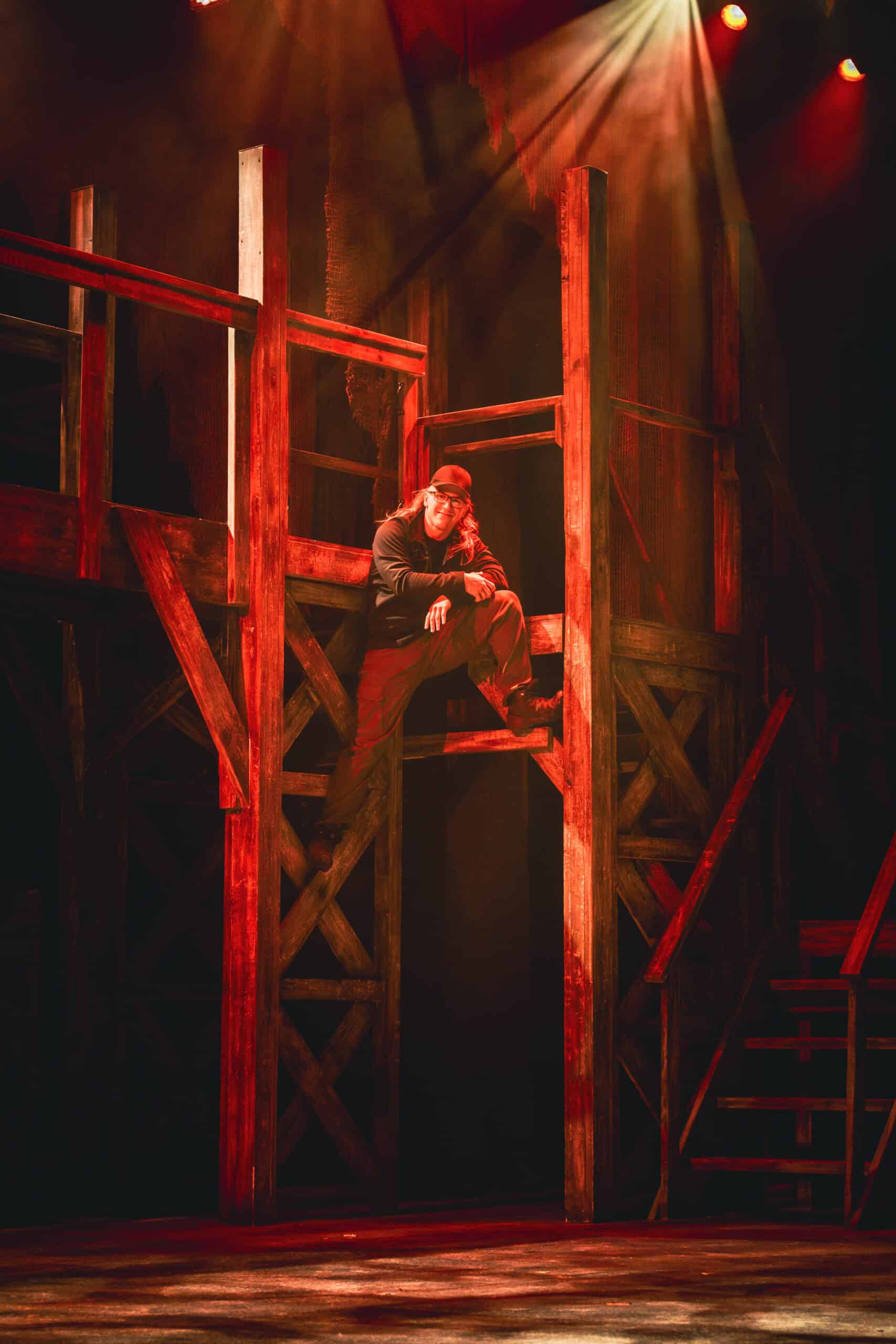
Now that GREAT Theatre’s production of Les Misérables has taken its final bow, we’re looking back at some of the behind-the-scenes work that helped bring the production to life. One role audiences may not think much about, but certainly saw in action, was that of fight director Mason Tyer.
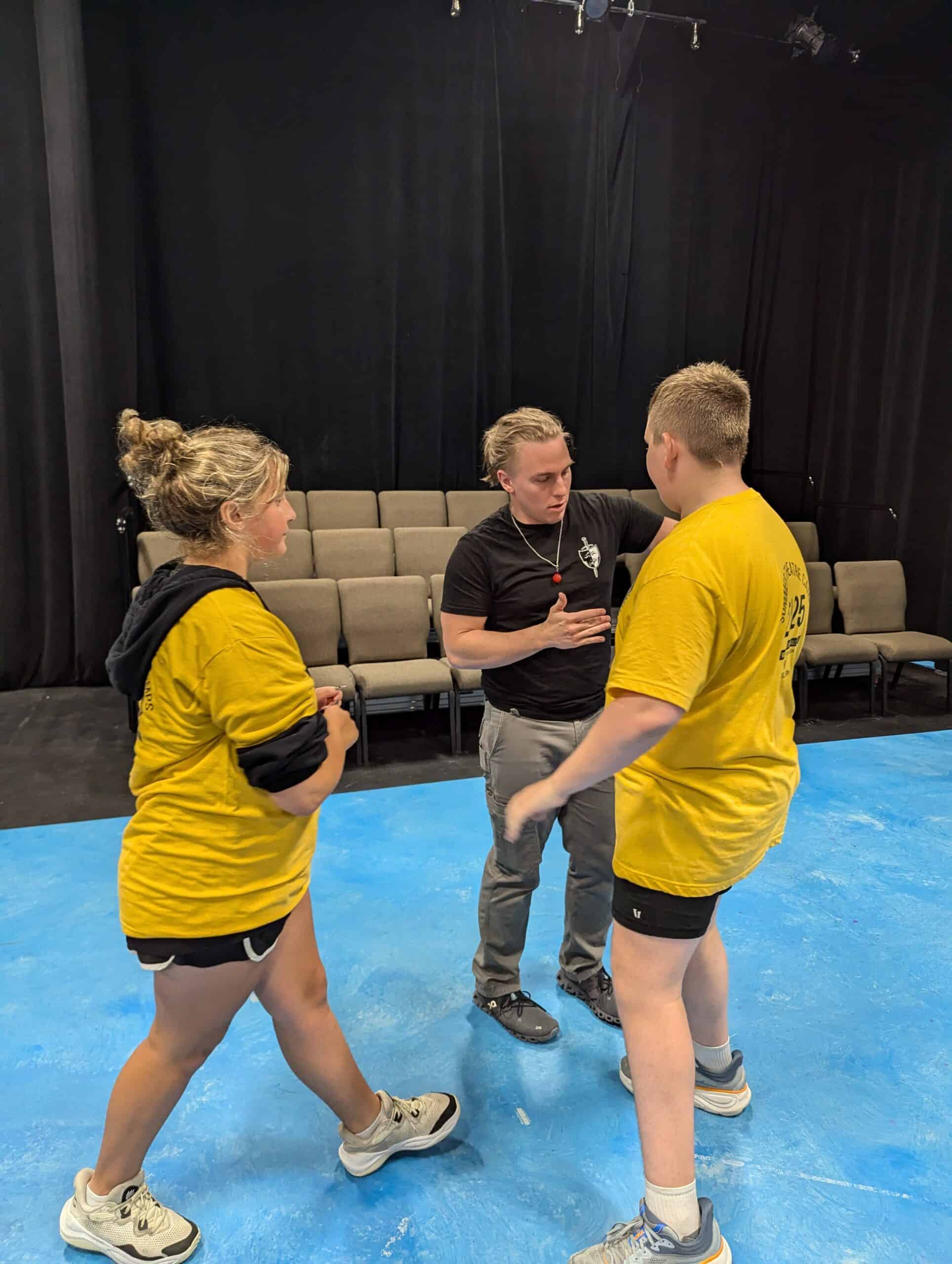
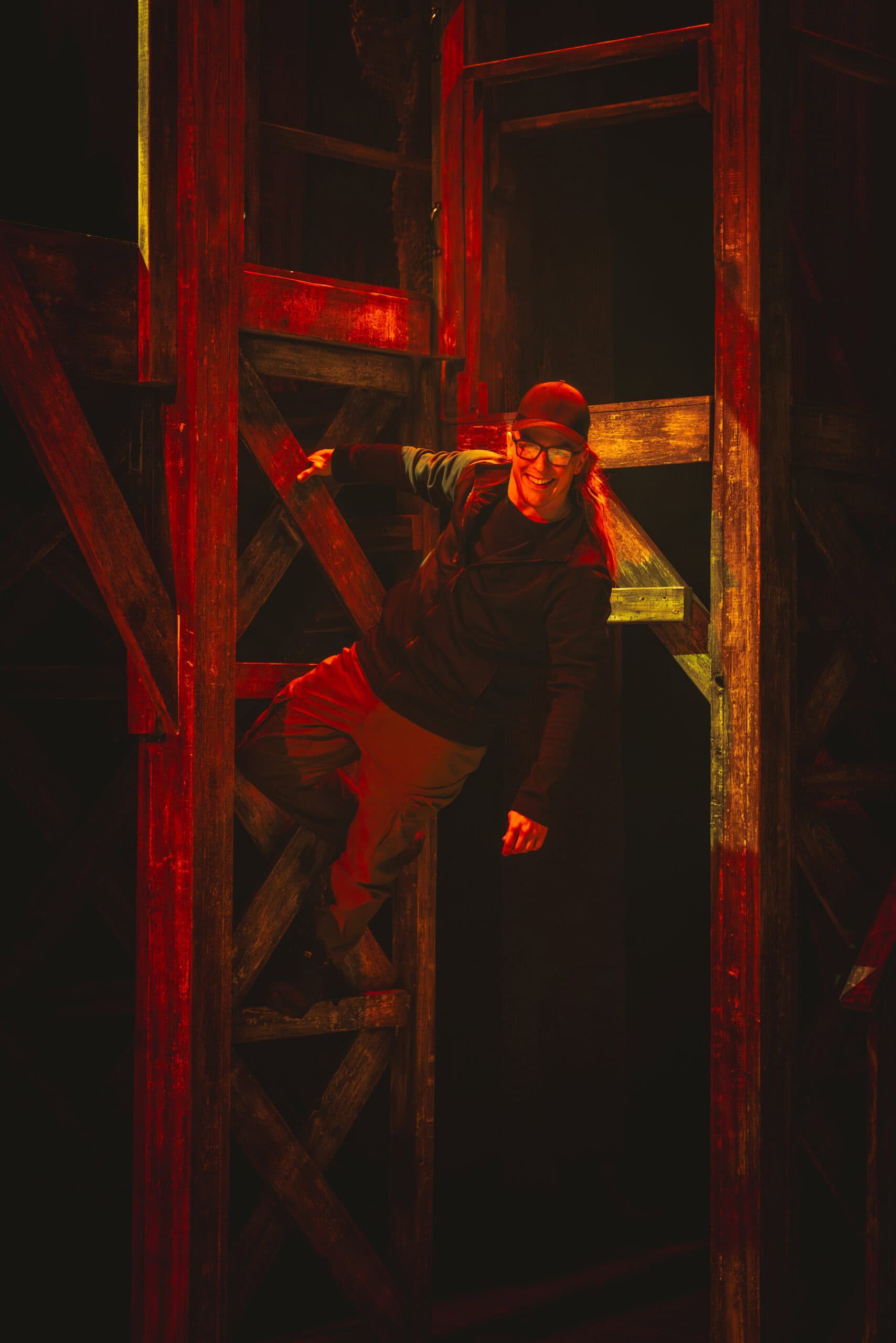
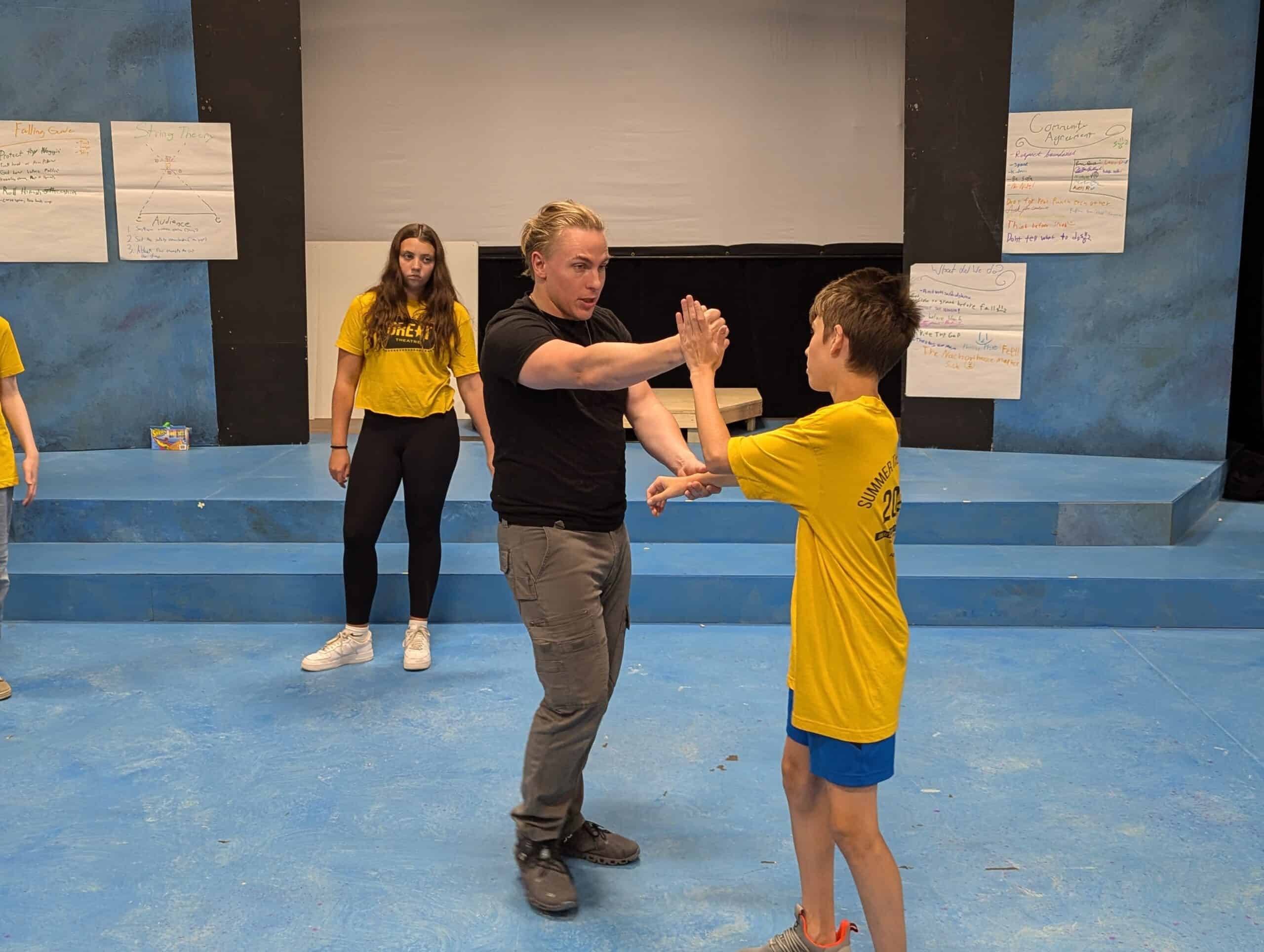
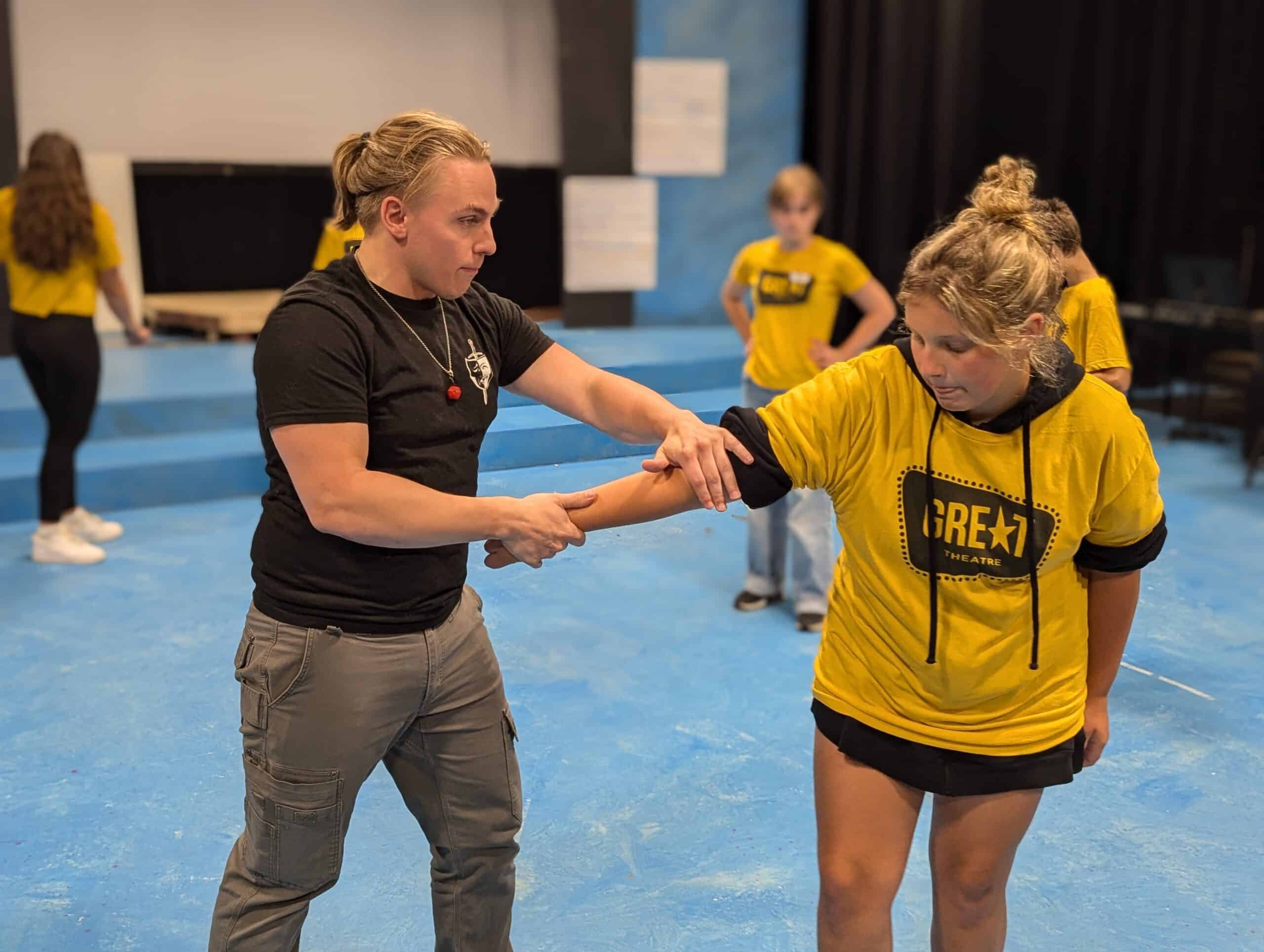
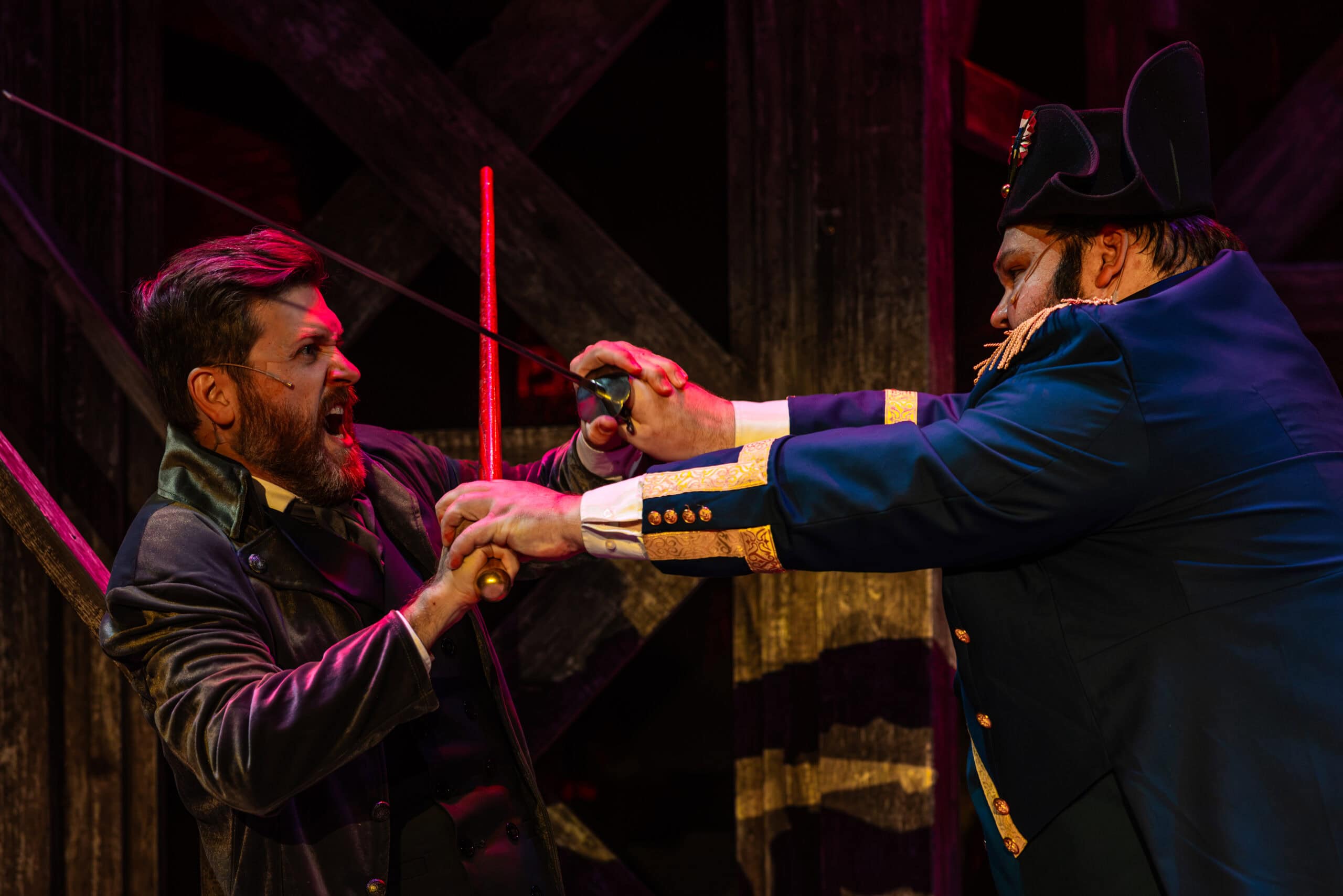
“A fight director, also known as a violence director or fight choreographer, partners with the director and actors to plan, direct, and rehearse simulated violence,” Mason explains. “Along with obvious moments like fights and falling, a fight director often helps with weapons training, stunts like rolls and freeclimbing, and character accidents like trips and door hits.”
The goal is to make those moments feel believable while keeping everyone involved safe. And that safety is no small part of the job.
Mason approaches the work with three guiding principles: “Clarity, Collaboration, Consistency.”
“Everyone involved needs clarity on how the fight changes the story and the audience. We get this through collaborating before and during rehearsals through discussions and experimentation. Finally, the litmus for quality work is choreography that the artists can sustain throughout the production run without injury, delivering the same story experience to audiences every night.”
That last part is especially important. The choreography needs to be repeatable and safe throughout a run, without losing the energy or storytelling that makes it work.
“Violence changes people, and so it should change characters.”
For Mason, stage combat is about more than the physical action. It’s another way to tell the story and reveal what a character wants or needs.
“Stage violence is a nonverbal dialogue on what the characters need the most: control, security, vengeance, or love. Everything from how long it takes them to decide what to do and how long they choose to hold a movement is informed by the character’s lived experience.”
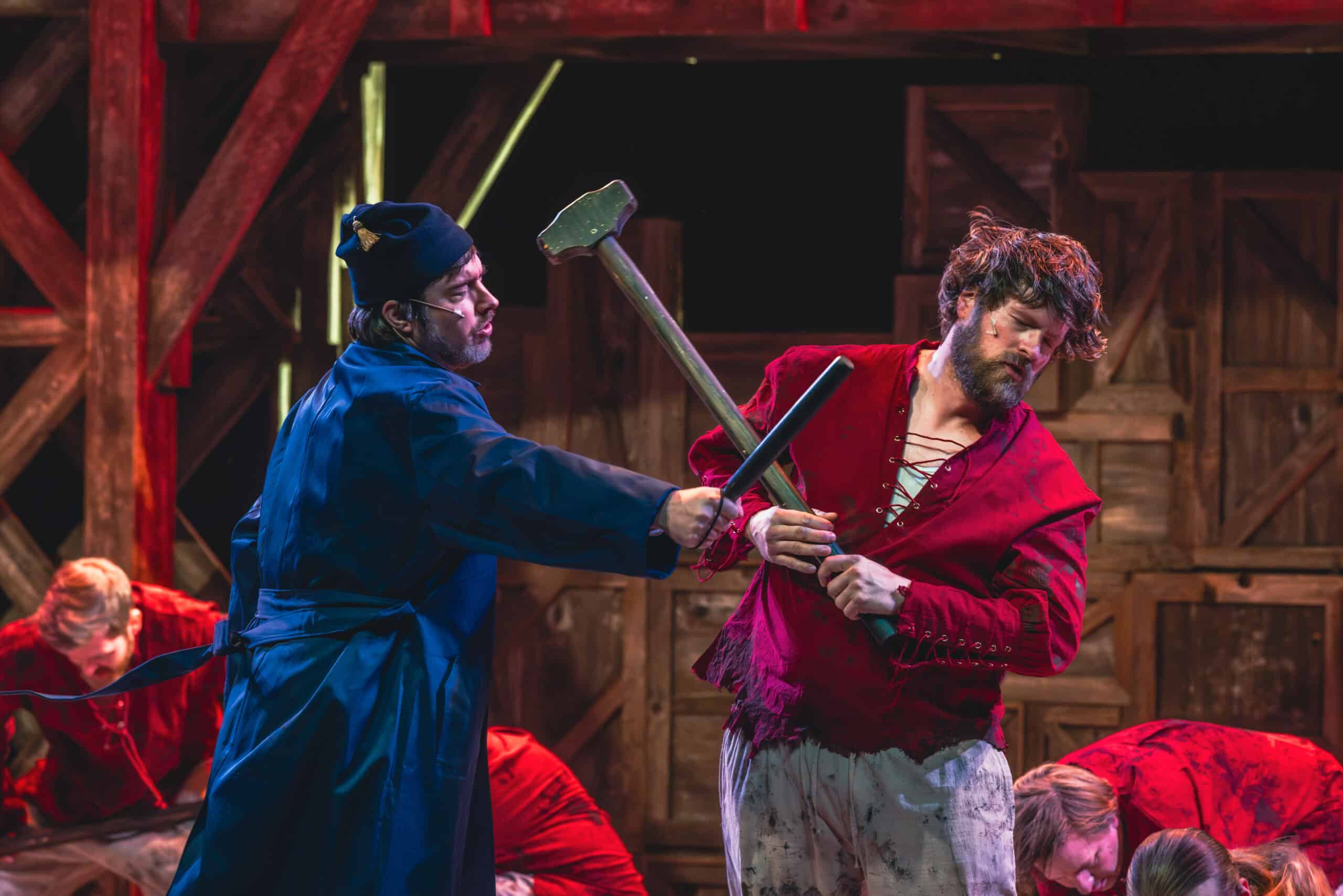
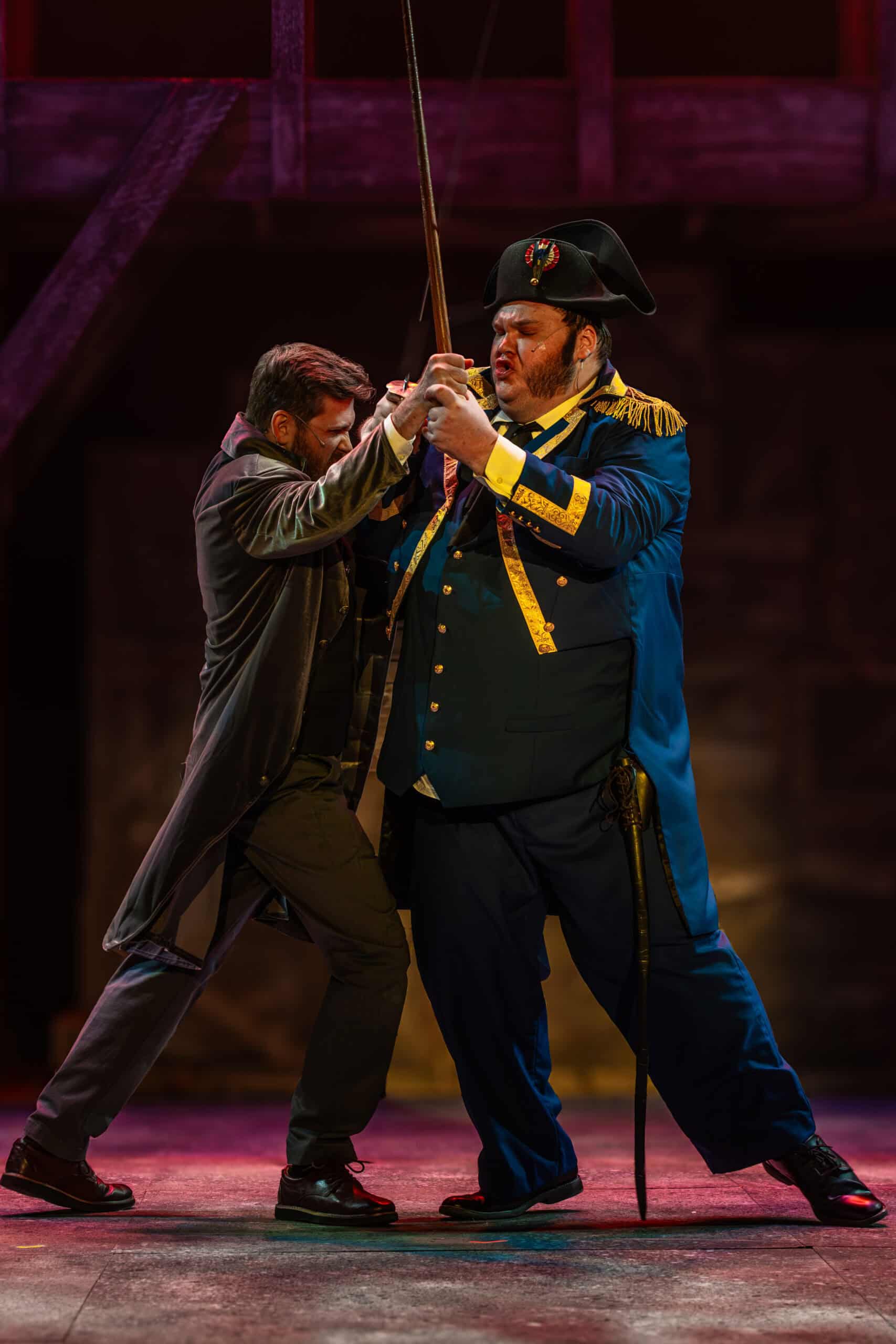
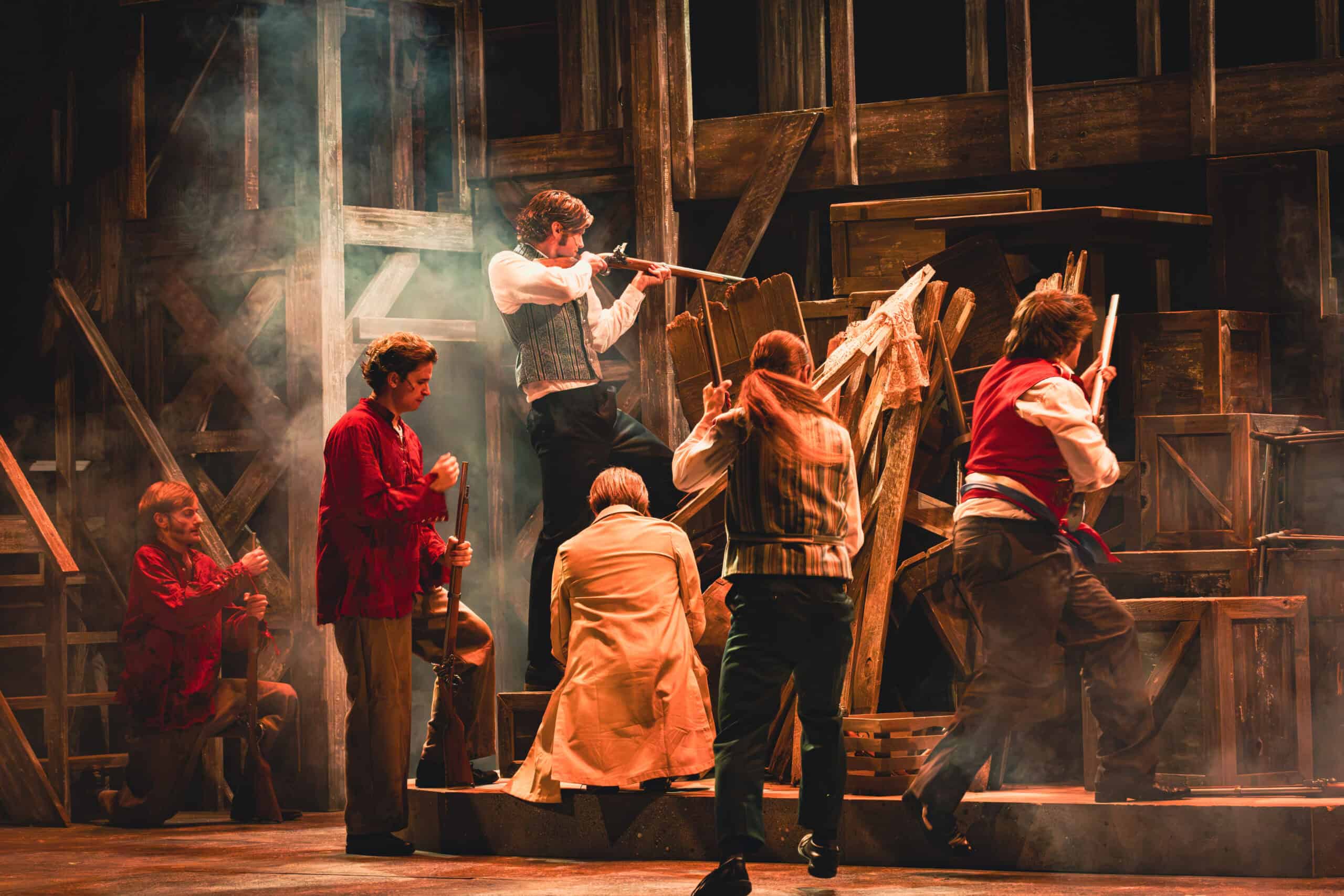
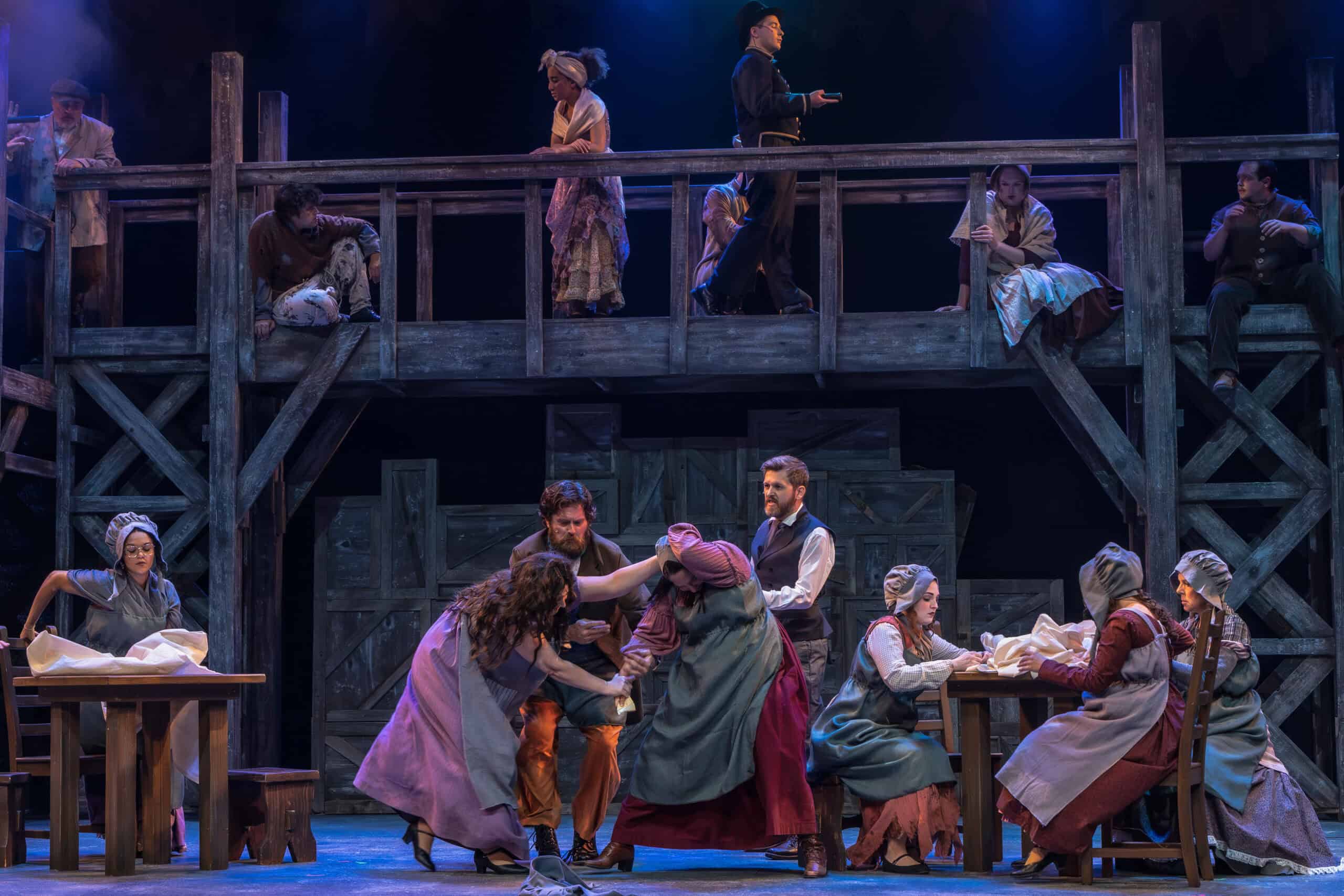
In Les Misérables, Mason worked alongside director Kendra Norton-Dando on the grabs, punches, slaps, falls, and some of the lifts outside the dance choreography. He also took the lead on much of the firearm work.
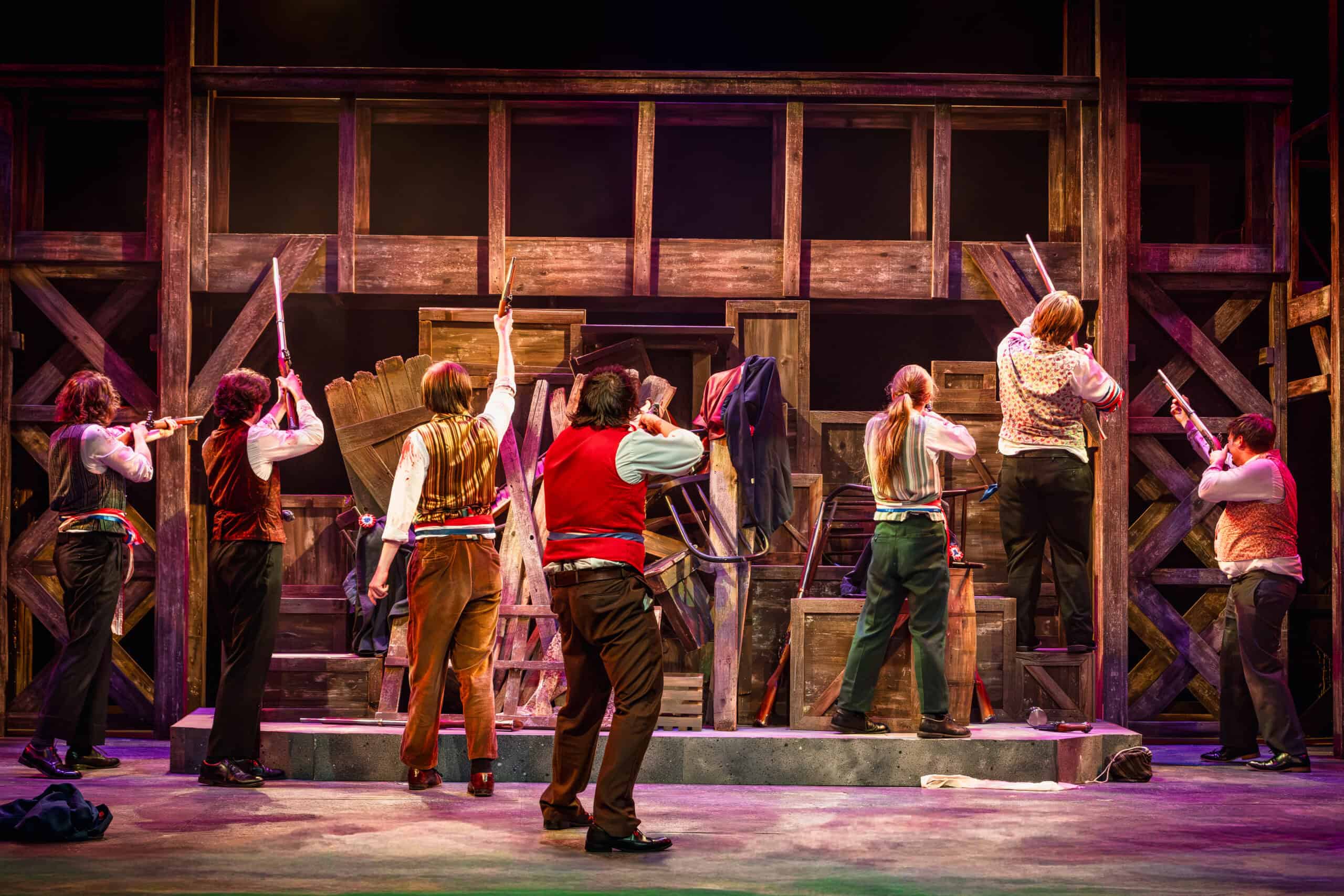
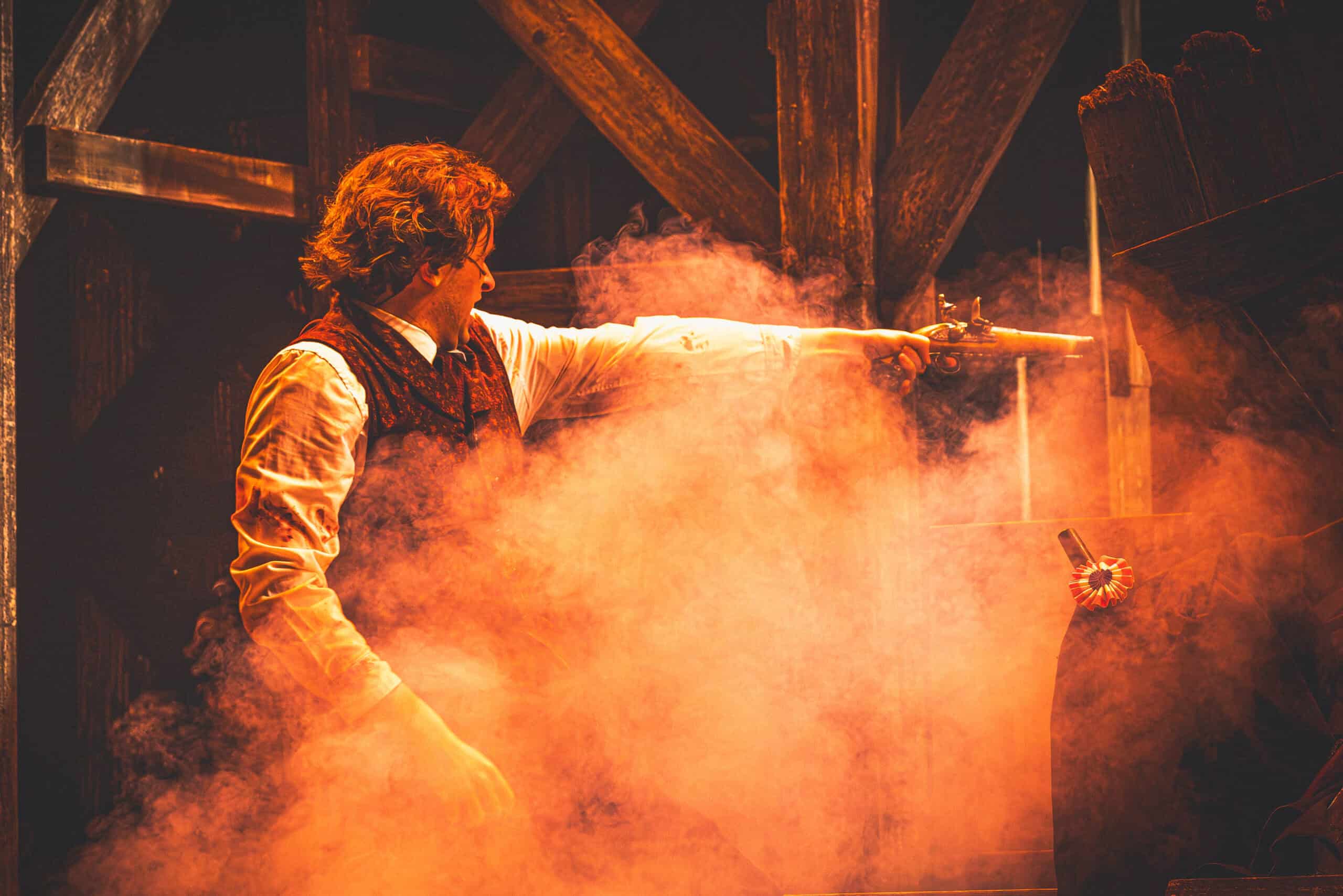
“Our society has a complicated relationship with guns, so we have been working to be respectful of the cast, technicians, and audiences in how they experience the firearms,” Mason says. “For example, we’re being diligent to avoid pointing muzzles at the audience and unexpected technicians in the wings, even though the prop guns can’t fire.”
With more than 20 prop guns being handled by dozens of actors across nearly all of Act II, that was no small feat.
So, how does someone become a fight director? Mason says stage combat has become a more established discipline over the last few decades, with classes and dedicated training opportunities available. Many people spend several years building their stage combat skills alongside experience in directing, actor coaching, dance choreography, or stage management. He recommends the Society of American Fight Directors as a starting point for anyone interested in learning more.
One of Mason’s favorite parts of the work is the collaboration. Stage violence is shaped by so many artists, from the actors and director to the designers and technicians who help bring each moment to life. Mason provides an outline of what the violence needs to accomplish in the story, along with best practices for keeping performances sustainable, and then everyone gets to experiment together.
His goal is always to ask: “This show has been done before, but how can we make this moment uniquely our own?”
And when all that work comes together, Mason gets to experience one of his favorite moments: seeing actors truly play the fight.
“After hours or weeks of hard work and care for each other, the fight choreography only starts to come alive when the actors can relax and, more than repeat the movements, live and breathe through them.”
Mason uses the word sprezzatura to describe the result: making difficult things look easy. In stage combat, the choreography and safety measures should disappear from the audience’s view, leaving only the characters and their story.
“When it all hits right, with energy and clarity and consequence, sometimes I forget I’m rehearsing and just get to be an audience member.”
And that’s when you know the fight is doing its job.